Smart, IRS-Compliant Strategies to Reduce Your Tax Bill and Keep More of What You Earn
Running a small business is hard enough — overpaying in taxes shouldn’t be part of the struggle. The good news? The U.S. tax code is filled with legal deductions, credits, and strategies designed specifically to support entrepreneurs and small business owners. The key is knowing what applies to you — and planning before deadlines hit.
At Dynamic Tax and Accounting, we help small and mid-sized business owners throughout Queens, the Bronx, Totowa, NJ, and nationwide virtually, reduce their tax burden strategically — not recklessly. In this guide, we’ll walk through proven, IRS-compliant ways to legally pay less in taxes while staying audit-ready.
At a Glance
- Choose the right business structure (LLC, S Corp, etc.)
- Maximize deductions for ordinary and necessary expenses
- Take advantage of the Qualified Business Income (QBI) deduction
- Use retirement plans to lower taxable income
- Leverage health savings accounts (HSAs)
- Time income and expenses strategically
- Claim tax credits (not just deductions)
- Separate tax planning from tax preparation
- Work with a proactive tax strategist, not just a form filer
1. Choose the Right Business Structure
Your business entity directly impacts how much tax you pay.
The IRS recognizes several structures: sole proprietorship, partnership, LLC, S corporation, and C corporation (see the official breakdown on the IRS Business Structures page: IRS business structure guidance).
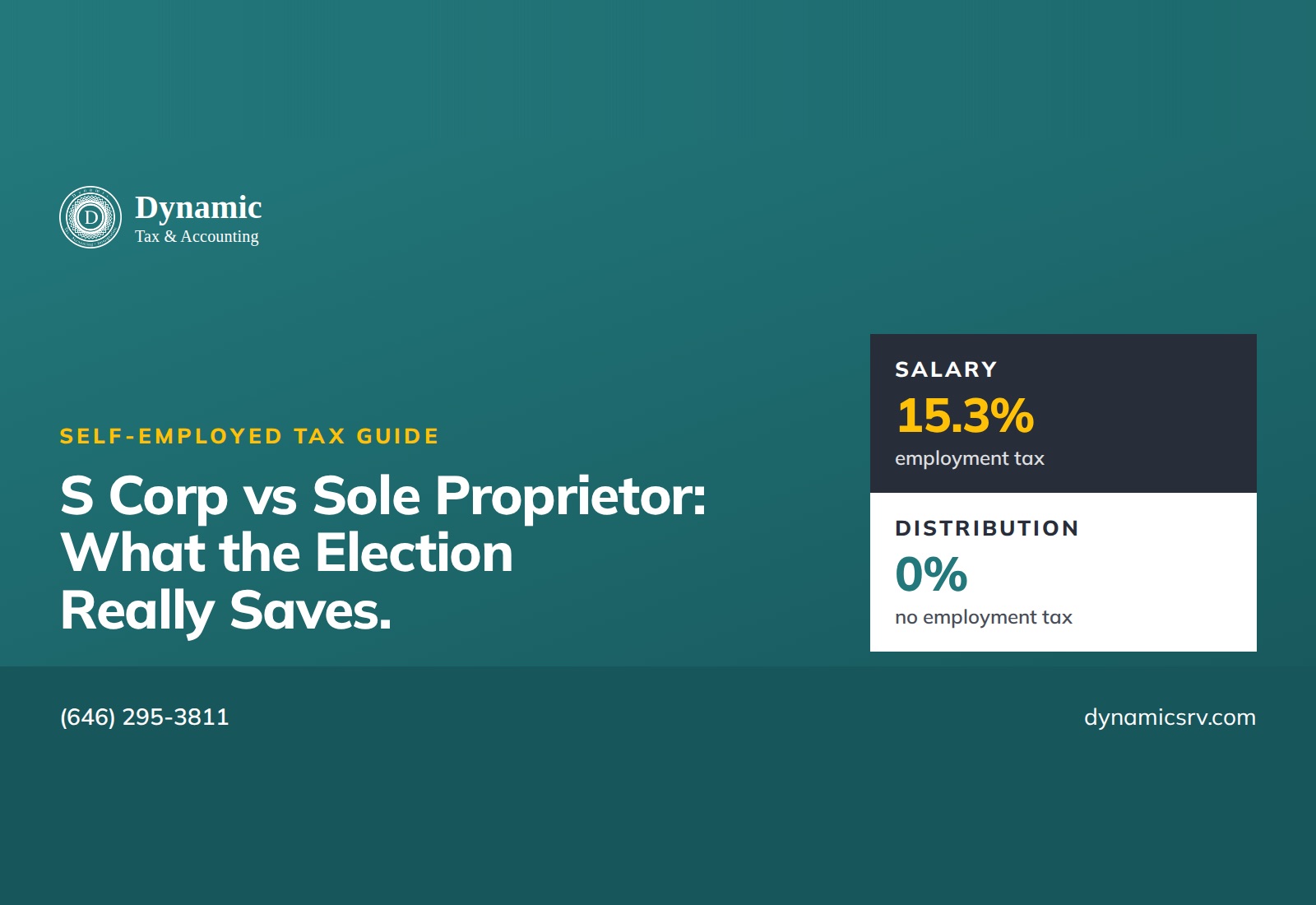
For many profitable small businesses, electing S Corporation status can reduce self-employment tax. Instead of paying self-employment tax (15.3%) on all profits, owners pay themselves a “reasonable salary” (subject to payroll taxes), and the remaining profit may avoid self-employment tax.
Example:
- LLC taxed as sole prop earning $120,000 → full amount subject to SE tax.
- LLC electing S Corp → $70,000 salary (taxed), $50,000 distribution (not subject to SE tax).
That difference alone can save thousands annually.

⚠️ This strategy must be structured properly to avoid IRS scrutiny.
2. Maximize Ordinary and Necessary Business Deductions
Under IRS rules (IRS Publication 535), businesses can deduct expenses that are ordinary and necessary.
Commonly missed deductions include:
- Home office deduction
- Business use of vehicle
- Mileage (2026 rate published annually by IRS)
- Software subscriptions
- Professional services (legal, accounting)
- Business insurance
- Marketing and advertising
- Continuing education
Many business owners leave money on the table simply because they don’t track expenses properly.

Pro Tip: Separate business and personal finances. A dedicated business bank account strengthens documentation and audit protection.
3. Use the Qualified Business Income (QBI) Deduction (Section 199A)
The Section 199A deduction allows eligible small business owners to deduct up to 20% of qualified business income.
Official guidance: IRS qualified business income deduction guidance
This deduction alone can dramatically reduce taxable income — but it phases out at higher income levels and has complex rules for specified service trades (law, health, consulting, etc.).
Strategic income management may help preserve eligibility.
4. Contribute to Retirement Plans (Tax Deferral Power)
One of the most powerful ways to legally lower taxes is through retirement contributions.
Options include:
- SEP IRA (IRS SEP plan guidance)
- Solo 401(k) (IRS Solo 401(k) guidance)
- SIMPLE IRA
A Solo 401(k) allows contributions as both employee and employer — often exceeding $60,000 annually depending on income and age.
Benefits:
- Reduces taxable income now
- Grows tax-deferred
- Builds long-term wealth
For high-earning entrepreneurs, this is essential.

5. Use a Health Savings Account (HSA)
If you qualify for a high-deductible health plan, an HSA is a triple-tax-advantaged tool:
- Contributions are tax-deductible
- Growth is tax-free
- Withdrawals for qualified medical expenses are tax-free
Learn more from the IRS: IRS Publication 969
For business owners, this functions almost like a stealth retirement account for healthcare costs.
6. Time Your Income and Expenses Strategically
Tax planning isn’t about what happened last year — it’s about what happens before December 31.
Strategies include:
- Accelerating expenses into the current year
- Delaying income into next year (cash-basis businesses)
- Using bonus depreciation (IRS Publication 946)
- Section 179 deductions
Proper timing can reduce your tax bracket or preserve deductions like QBI.
This is why tax planning differs from tax preparation. Filing returns reports history. Planning changes outcomes.
7. Claim Tax Credits (Better Than Deductions)
Deductions reduce taxable income.
Credits reduce tax dollar-for-dollar.
Often overlooked credits:
- Work Opportunity Tax Credit (IRS Work Opportunity Tax Credit guidance)
- Research & Development Credit (IRS Form 6765)
- Energy-efficient equipment credits
- Employer-provided childcare credits
Many small businesses assume credits only apply to large corporations. That’s simply not true.
8. Manage Payroll Strategically
If you have employees, payroll structure matters.
- Proper classification (W2 vs 1099)
- Accountable plans for reimbursements
- Fringe benefits structuring
- Health insurance deductions
Improper classification can lead to penalties (IRS independent contractor guidance).
Proactive structuring prevents IRS problems and saves money long-term.
9. Consider Accountable Plans
An Accountable Plan allows S Corp owners to reimburse themselves for business expenses personally paid — without increasing taxable income.
Without this plan:
- Reimbursements may be taxable.
With proper documentation:
- Fully deductible to the business.
- Not taxable to you.
This is an advanced but powerful compliance strategy.
10. Separate Personal and Business Strategy
Small business owners often mix tax, investing, and compensation decisions without an integrated plan.
Legal tax reduction works best when:
- Business income planning
- Personal tax brackets
- Retirement planning
- Estate planning
are coordinated.
This holistic approach is where experienced advisory firms create real value.
The Biggest Mistake: Waiting Until Tax Season
By the time you file in March or April, most tax-saving opportunities are gone.
The IRS tax calendar (IRS Tax Calendar) makes it clear: deadlines matter.
Strategic tax reduction happens:
- Mid-year reviews
- Quarterly projections
- Year-end planning
Not during last-minute filing.

How Dynamic Tax and Accounting Helps Business Owners Pay Less — Legally
At Dynamic Tax and Accounting, we specialize in helping small to mid-sized business owners:
- Reduce tax liability through proactive planning
- Optimize business structure
- Implement retirement strategies
- Stay compliant and audit-ready
- Navigate complex IRS regulations
We serve clients across Queens, Bronx, Totowa, NJ, and virtually nationwide. Our approach goes beyond filing forms — we help business owners build tax-efficient systems that grow wealth over time.
Legal tax reduction isn’t about cutting corners. It’s about understanding the code and applying it strategically.
Ready to Pay Less in Taxes — The Right Way?
If you’re a small business owner tired of overpaying and guessing at tax strategy, it’s time for a proactive plan.
📞 Call us at (646) 295-3811
📧 Email: admin@dynamicsrv.com
🌐 Contact us here: https://www.dynamicsrv.com/contact-us-2/
Let’s build a strategy that keeps more money in your business — legally.
Resources
IRS Work Opportunity Tax Credit: IRS Work Opportunity Tax Credit guidance
IRS Small Business Tax Guide: IRS Publication 334
IRS Business Deductions Guide (Publication 535): IRS Publication 535
IRS Retirement Plans for Small Business: IRS P4333
Qualified Business Income Deduction Overview: IRS qualified business income deduction guidance
SBA Guide to Business Structures: SBA business structure guide
Want to get in touch?
Email: admin@dynamicsrv.com
Call: (646) 295-3811
Schedule a consultation today and turn tax season into a strategic advantage.
Bronx Office
- 2044 McGraw Ave., Bronx, NY 10462
Queens Office
- 168-29 Hillside Ave. 2C, Jamaica, NY 11432
Buffalo Office
- 1989 Clinton St, Buffalo, NY 14206
New Jersey Office
- 63 Union Blvd. Totowa, NJ 07512
Call us at (646) 295-3811
Email: admin@dynamicsrv.com
Contact us
Disclaimer: This article is for informational purposes only and does not constitute legal, tax, or financial advice. Individual circumstances vary. Please consult a qualified tax professional before making financial decisions.