If you drive for a rideshare company, do freelance design work, tutor students on weekends, or sell handmade goods on Etsy, you are running a business — even if it does not feel that way. And running a business in New York means you almost certainly owe quarterly estimated taxes. Missing those payments (or miscalculating them) can cost you real money in penalties, even when you ultimately get a refund at the end of the year.
This guide walks you through who must pay, when to pay, how to calculate the right amount, and how to avoid the underpayment penalty — all in plain English.
Who Must Make Quarterly Estimated Tax Payments?
Two federal rules trigger the estimated-tax requirement:
Net self-employment income of $400 or more. According to the IRS, you must file a federal income tax return if your net earnings from self-employment reach $400 or more in a year. Self-employment tax (Social Security + Medicare) starts at that same threshold.
Expect to owe $1,000 or more after withholding. The IRS requires quarterly estimated payments if you expect to owe at least $1,000 in federal tax for the year after subtracting any withholding and refundable credits. This catches freelancers, gig workers, consultants, landlords, investors, and retirees with pension income.
New York State lowers its own bar: you must make estimated state payments if you expect to owe at least $300 in New York State income tax, $300 in New York City income tax (if you live in the five boroughs), or $300 in Yonkers income tax — per the NY Department of Taxation and Finance.
Practical example: You earn $30,000 from freelance graphic design in 2025. Your net SE income is well over $400, and after the SE deduction you likely owe several thousand dollars in combined federal and state tax. You need to pay quarterly.
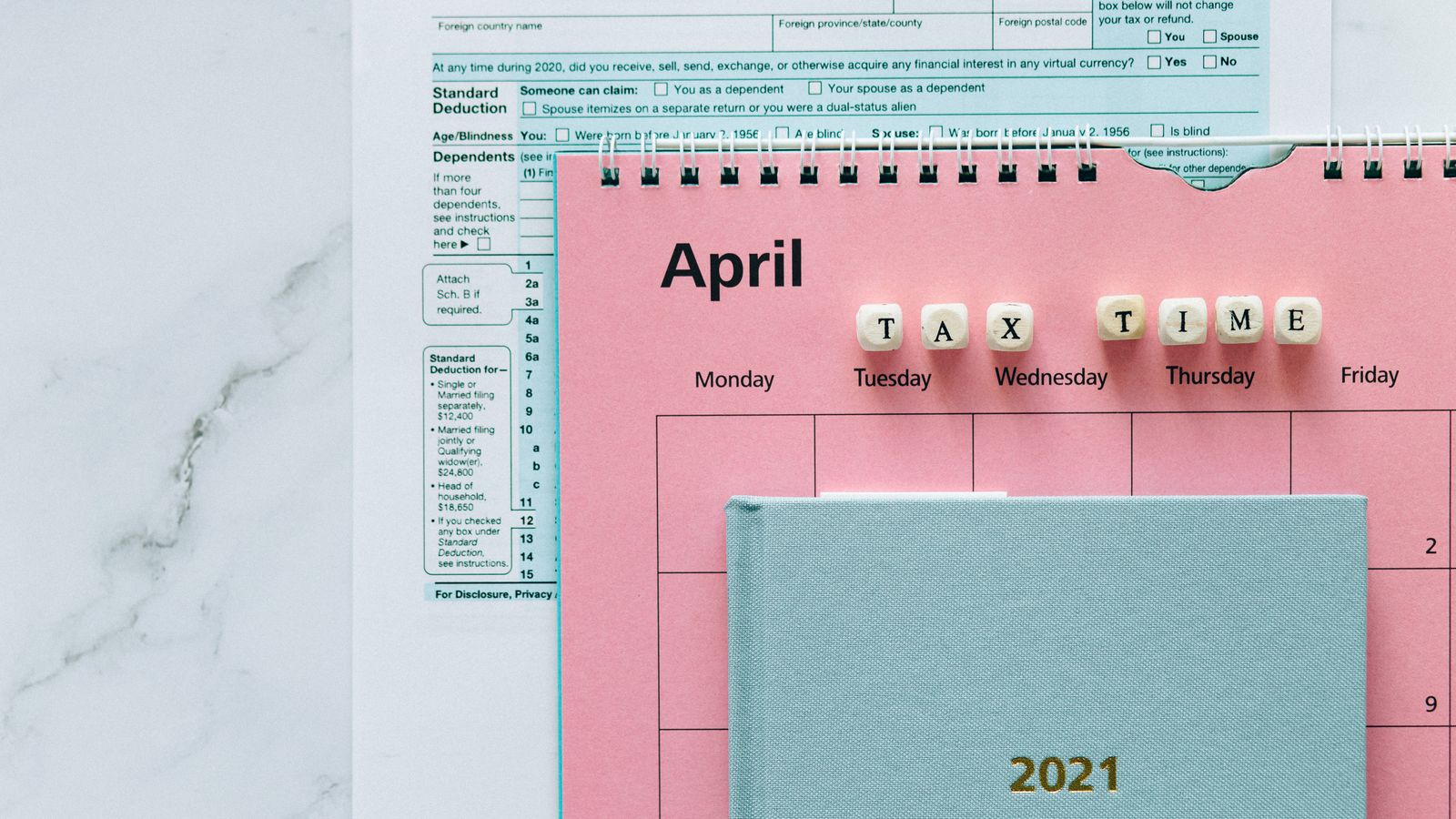
The 2025 Estimated Tax Payment Deadlines
Federal and New York State use the same four due dates each year. For the 2025 tax year:
| Payment Period | Income Covered | Federal & NY State Due Date |
|---|---|---|
| 1st Quarter | Jan 1 – Mar 31 | April 15, 2025 |
| 2nd Quarter | Apr 1 – May 31 | June 16, 2025 |
| 3rd Quarter | Jun 1 – Aug 31 | September 15, 2025 |
| 4th Quarter | Sep 1 – Dec 31 | January 15, 2026 |
The June date shifted to June 16 in 2025 because June 15 fell on a Sunday — the IRS confirmed June 16, 2025 as the second-quarter deadline. When a deadline lands on a Saturday, Sunday, or federal holiday, it moves to the next business day.
For the 2026 tax year, the dates shift to April 15, June 15, September 15, 2026, and January 15, 2027 — confirmed in the Form IT-2105 voucher published by New York State.
How to Pay
- Federal: Pay at IRS.gov via Direct Pay, credit/debit card, or the Electronic Federal Tax Payment System (EFTPS). You can also mail a check with Form 1040-ES.
- New York State: File Form IT-2105 online through the NY Tax Department's portal or by mail.
NYC Residents: One Payment Covers Both
If you live in New York City, you do not file a separate estimated payment for NYC income tax. Your city tax is bundled into the same IT-2105 payment you make to New York State — as confirmed by the NY Tax Department. One form, one check, city tax included.
How to Calculate What You Owe Each Quarter

There are two main methods:
Method 1: Safe Harbor (The Easy Way)
The IRS safe-harbor rule lets you avoid the underpayment penalty entirely by basing payments on what you paid last year rather than predicting this year's income:
- If your prior-year AGI was $150,000 or less (or $75,000 or less if married filing separately): pay 100% of last year's tax liability, divided equally across four payments.
- If your prior-year AGI exceeded $150,000: pay 110% of last year's tax liability. This extra cushion is designed for higher earners.
New York State mirrors this rule: the 110% threshold also applies for NY taxpayers whose NY adjusted gross income exceeded $150,000 in the prior year.
Alternatively, you can always pay 90% of your current-year tax liability to stay safe — but that requires a more accurate projection of this year's income.
Method 2: Actual Income Method (More Precise)
Use the worksheet in Form 1040-ES to estimate your income, deductions, and credits for the current year. In broad strokes:
- Estimate your gross self-employment income for the year.
- Subtract business deductions (home office, equipment, mileage, software, etc.).
- Subtract the 50% SE tax deduction (you can deduct half of self-employment tax from gross income).
- Apply the standard deduction for your filing status.
- Look up your income tax using the current tax brackets.
- Add the SE tax (15.3% on the first $176,100 of net earnings for 2025; 2.9% above that threshold).
- Divide by four for your quarterly payment.
If your income is uneven — say you make most of your money in summer — you can use the "annualized income installment method" (Form 2210, Schedule AI) to match payments to the quarter in which income was actually earned.
The Underpayment Penalty: What It Is and How to Avoid It
If you underpay any quarterly installment, the IRS charges an underpayment penalty based on the federal short-term interest rate plus 3 percentage points — which ran at 7% annually throughout all four quarters of 2025, per the IRS quarterly interest rate table. The penalty is calculated quarter by quarter, not just at year end.
You avoid the penalty entirely if any of these apply:
- Your total tax owed (after withholding) is less than $1,000.
- You paid at least 90% of the current year's tax through withholding and/or estimated payments.
- You paid 100% (or 110% for high earners) of the prior year's tax — the safe harbor described above.
The $300 NY threshold means you should also confirm your state and city obligations are fully met. The NY penalty rate tracks the IRS rate closely.
Common Mistakes Freelancers and Gig Workers Make
- Skipping Q1 because they "just started." Self-employment income in January counts toward the April 15 deadline. Starting late means you may owe a partial-quarter penalty.
- Forgetting SE tax. Freelancers owe both income tax and a 15.3% self-employment tax on net earnings. Many first-year freelancers dramatically underestimate what they owe.
- Treating all 1099 income as profit. Business expenses (subscriptions, equipment, mileage, a dedicated home workspace) reduce taxable income. Deductions you miss mean you overpay.
- Ignoring New York City tax. NYC residents pay a city income tax of up to 3.876% on top of federal and state. That adds up fast on freelance income.
Frequently Asked Questions
Q: Do I owe estimated taxes if I also have a W-2 job?
Yes, if your total tax from the side income pushes you past the $1,000 threshold after accounting for withholding from your W-2. A practical solution: ask your employer to withhold an extra fixed amount each pay period — you can do this on a new Form W-4. That extra withholding counts against your quarterly obligations.
Q: What if I miss a payment or pay too little?
File and pay as soon as possible. The underpayment penalty accrues from the due date of the missed installment until you pay — but it is not a catastrophe. You can calculate the penalty yourself using Form 2210 or simply wait for the IRS to bill you.
Q: I earned income in only one or two quarters. Do I still need four payments?
Not necessarily. The annualized income installment method lets you pay only for the quarters in which income was earned. You document this using Form 2210. A tax professional can help you determine whether this method saves you money.
Let Dynamic Tax Take This Off Your Plate
Calculating quarterly payments, keeping up with deadlines, and accounting for New York's layered tax system is genuinely complicated. One missed or miscalculated payment can mean interest charges that pile up all year.
Dynamic Tax & Accounting Services' Essential Plan at $99/month includes preparation and filing of your quarterly estimated tax payments — so you never miss a deadline or underpay again. Our IRS Enrolled Agents understand the federal and New York rules inside and out, and we treat every client like family.
Offices in the Bronx, Jamaica/Queens, Buffalo NY, and Totowa NJ — plus virtual service in all 50 states.
Schedule a free consultation at dynamicsrv.com and put your quarterly taxes on autopilot.
Ready to talk to Dynamic Tax? See our flat monthly pricing plans starting at $99/month, or book a free consultation. Offices in the Bronx, Jamaica/Queens, Buffalo, and Totowa, NJ — plus virtual service in all 50 states. Call (646) 295-3811 or download the Dynamic Tax App to get started today.